Alphabet H: A Charming, Versatile Letter for Personalized Gifts
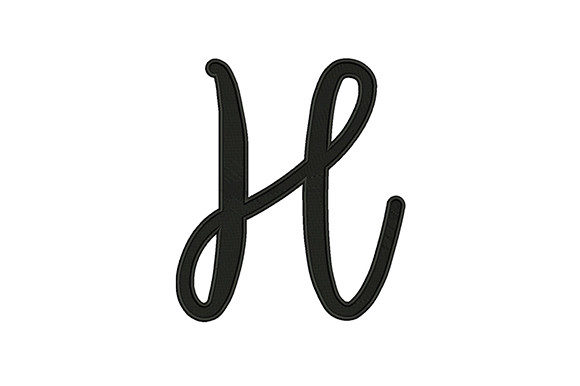
As an embroidery designer who’s developed and tested hundreds of machine embroidery designs for small shops, Etsy sellers, and custom gift studios, I approached Alphabet H with a practical eye—and a warm smile. It’s not just another letter. It’s a quiet, confident presence: simple in structure but rich in charm. From the first glance at the digital embroidery file, I felt its handmade soul—rounded edges, gentle curves, and balanced proportions that avoid stiffness without sacrificing clarity. It reads as playful yet timeless, sweet but never cutesy, modern enough for a minimalist apron yet classic enough for a baby blanket passed down through generations.
This isn’t a high-detail monogram or a script flourish—it’s a clean, friendly block letter with subtle personality. The stroke weight is consistent but not heavy; the inner counters (the open spaces inside the ‘H’) are generously sized, ensuring they won’t fill in on medium-weight cotton or linen. That balance makes Alphabet H unusually versatile across use cases—from back-to-school tote bags to wedding keepsakes—and deeply trustworthy for makers who prioritize reliability over trend-chasing.
Where Alphabet H Shines: Real-World Gift Applications
Let’s talk about what happens when you stitch Alphabet H onto real products—not just test fabric, but finished pieces customers hold, gift, and cherish:
- Baby embroidery: On a muslin swaddle or organic cotton onesie, Alphabet H feels tender and intentional—ideal for initials on nursery decor or milestone blankets. Its openness prevents puckering on soft, low-stretch fabrics.
- Wedding gift: Embroidered on a linen pillow cover or hand-towel set, it adds quiet elegance. Pair it with a monogrammed “H” for Hannah or Henry—or use it as part of a shared initial set (e.g., “H + M”) on a custom kitchen towel. Customers love that it feels handmade, not mass-produced.
- Personalized towel & pillow cover: Because Alphabet H avoids ultra-thin lines and tight corners, it holds up beautifully on terry cloth and textured weaves—no skipped stitches or thread breakage when hooping a thick embroidered towel.
- Nursery decor & blanket embroidery: Stitched on a quilted cotton blanket or wall-hanging, its clarity reads from across the room. No visual fatigue—just warmth and intention.
- Tote bags, aprons & custom totes: On canvas or denim, Alphabet H grounds the design without overwhelming. It’s large enough to read easily, small enough to leave room for complementary motifs (a tiny heart, a star, or even a back-to-school pencil icon).
- Craft fair & Etsy listings: As a digital embroidery file, Alphabet H performs well in printable mockups. Its clean shape photographs crisply on light and dark backgrounds—boosting buyer engagement and perceived value in your shop gallery.
Where to Use Alphabet H Thoughtfully
Even the most adaptable machine embroidery design has boundaries—and knowing them builds customer trust and reduces remake requests. Here’s where Alphabet H asks for mindful application:
- Small lettering: Avoid scaling below 2.5 inches tall. At tiny sizes, the vertical bars may lose definition, especially on dense or napped fabrics.
- Textured or thick fabrics: While it handles terry cloth well, extremely plush terrycloth or heavily quilted blankets may require extra stabilizer support—test first.
- Stretchy baby clothes: Not ideal for knits without proper cut-away stabilizer and reduced stitch density. Stick to woven cottons or pre-shrunk blends for best results.
- Curved surfaces: Think mugs or curved pillow forms—Alphabet H isn’t engineered for distortion. Keep it flat: towels, flat pillow fronts, tote panels.
- Dark fabric: Always check thread color contrast in your mockup. Light threads (ecru, pale gray, soft yellow) pop beautifully—but verify legibility before final stitching.
- Frequent-wash items: Like kids’ aprons or kitchen towels—confirm your thread quality and stitch density support durability. A slightly higher density helps longevity without compromising softness.
Why Alphabet H Builds Emotional Connection—and Sales
Customers don’t buy letters. They buy meaning. When someone chooses Alphabet H for their newborn’s first blanket, they’re choosing care. When a teacher selects it for a back-to-school tote, they’re choosing approachability. That emotional resonance lifts perceived value instantly—especially for handmade product buyers who scroll past generic fonts looking for authenticity.
For Etsy sellers and small shop owners, Alphabet H supports strong product photography: its clean form renders beautifully in natural light, scales well across listing thumbnails and detail shots, and pairs effortlessly with neutral or earth-toned backdrops. It also invites personalization storytelling—“Monogrammed with love,” “Initials stitched by hand,” “Made just for [Name].” That language builds trust and encourages repeat orders.
Practical Embroidery Notes Before You Stitch
Before adding Alphabet H to your next batch of personalized gifts, take these five minutes to protect your time, materials, and reputation:
- Run a test on scrap fabric—same type and weight as your final product.
- Check thread color contrast on both light and dark fabric mockups.
- Confirm hoop size compatibility—some versions of this design may fit standard 4x4 or 5x7 hoops, but always verify before digitizing or resizing.
- Review stitch density—if it feels too sparse for your fabric, consider a light increase (but never exceed recommended limits for delicate items).
- Use the right stabilizer: tear-away for stable wovens, cut-away for knits or stretchy items, and water-soluble for sheer layers like organza overlays.
And one non-negotiable: if you’re selling finished products commercially—whether on Etsy, at craft fairs, or through your own small shop—confirm commercial licensing for this digital embroidery file. Reputable designers clearly state usage rights. When in doubt, reach out before you list.
At its heart, Alphabet H is more than a machine embroidery design—it’s a thoughtful, reliable tool for makers who believe in the power of the personal. It doesn’t shout. It invites. It fits quietly into baby nurseries, wedding registries, classroom supplies, and kitchen shelves—and leaves room for meaning to settle in. For embroidery makers building legacy through stitch, that’s not just practical. It’s precious.