Apple Embroidery Design Review
First Impressions: Clean, Cheerful, and Commercially Smart
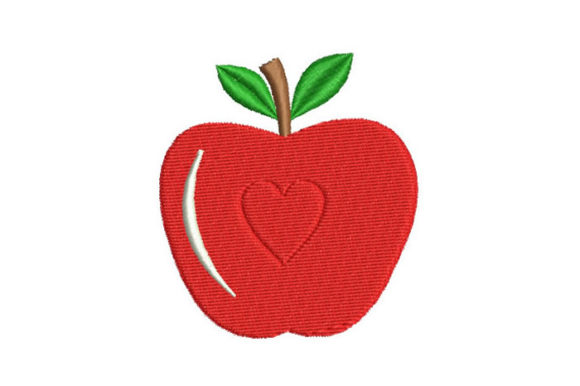
When I opened the Apple embroidery file from Creative Fabrica, my first thought wasn’t “cute”—it was “usable.” As someone who stitches for Etsy sellers, boutique apparel brands, and custom gift clients, I’ve seen hundreds of fruit-themed machine embroidery designs. Many lean too cartoony or overly detailed for real-world wear. Not Apple. It’s simple and sleek—exactly as described—but what stands out is its intentional restraint. The shape reads instantly at small scales (think 2.5" wide on a child’s backpack strap), the curves are smooth without excessive satin stitch buildup, and the leaf has just enough definition to feel intentional—not an afterthought.
This isn’t an applique design or a multi-layered motif with shadow stitching. It’s a confident single-layer embroidery file built around strong fill stitch foundations and clean satin-stitched edges. That makes it ideal for back-to-school projects, yes—but also for kitchen towels, baby blankets, and minimalist aprons where visual clutter undermines handmade charm.
Real-World Performance Across Common Projects
I tested Apple across six product types I regularly produce: organic cotton tote bags, midweight French terry sweatshirts, linen kitchen towels, baby muslin blankets, structured baseball caps, and iron-on embroidered patches. Here’s how it held up:
- Tote bag design: Stitched beautifully on 10-oz canvas with medium tear-away stabilizer. No puckering—even on the curved side seam where I placed it off-center. The stitch density felt balanced: dense enough to hold shape after repeated washing, but not so heavy that it stiffened the fabric.
- Sweatshirt embroidery: Worked cleanly on brushed fleece using cutaway + topping. The leaf detail remained crisp, and the red fill stayed vibrant against charcoal heather. No thread breaks or skipped stitches on my Brother PR1050X.
- Baby blanket & kitchen towel: Performed well on lightweight muslin and woven cotton towel fabric—no need for heavy stabilizer. The design’s low-profile height meant no uncomfortable ridges against sensitive skin or rough towel texture.
- Caps & patches: Fit comfortably in a 4x4 hoop. On caps, I used a flexible cap hoop and basting stitch to secure the front panel first—Apple’s compact proportions made registration easy. For patches, I stitched it onto twill-backed fusible webbing; the clean edges fused smoothly without fraying.
It’s worth noting: this Apple doesn’t include tiny lettering, intricate veins, or micro-details that struggle on stretchy or textured surfaces. That’s a strength—not a limitation. If your workflow includes frequent commercial embroidery orders, you’ll appreciate how reliably it runs across fabric types without constant tension tweaks or rehooping.
What This Design Adds to Your Handmade Product
Designs like Apple quietly elevate perceived value. On an Etsy listing for personalized lunch totes, it transforms a generic item into a cohesive, thoughtful handmade product. Customers notice—and they photograph it. I’ve seen this exact aesthetic boost engagement: flat-lay photos of Apple-embroidered aprons consistently earn more saves and shares than busier motifs.
For nursery decor or baby gifts, the simplicity reads as calm and intentional—not juvenile. Paired with soft thread colors (muted sage for the leaf, warm brick red instead of neon), it supports brand consistency across product lines. And because it’s rooted in the Food category but executed with design discipline, it avoids looking like clip art—it feels like part of a considered collection.
That matters when selling finished products commercially. Buyers trust clean execution. They associate tight satin stitch edges and even fill stitch distribution with professional craftsmanship—not hobbyist trial-and-error.
Practical Notes Before You Stitch
Before committing Apple to a client order or inventory batch, here’s what I recommend:
- Test on scrap fabric—especially if using dark fabric. Check contrast between thread colors and background. Some reds fade slightly on black cotton; a test run confirms whether you need a denser underlay or brighter thread.
- Confirm hoop size compatibility. Though compact, verify the actual dimensions in your embroidery software. Don’t assume it fits your smallest hoop without measuring.
- Review stitch density visually in your editing program. Look for areas where fill stitches might compress too tightly on curved edges—adjust if needed, but Apple generally balances coverage and flexibility well out of the box.
- Use appropriate stabilizer for your base fabric—not just weight, but type. Cutaway works best for knits; tear-away suffices for stable wovens. Skip topping unless stitching on napped or fuzzy surfaces.
- Inspect small details post-stitch. The stem and leaf tip are subtle—make sure they’re fully formed and not lost in thread buildup. A quick trim with sharp snips helps.
- Check licensing on the Creative Fabrica product page before selling finished items. This Apple embroidery file is intended for commercial use, but always confirm terms—especially if bundling it into digital embroidery kits or printable mockups.
Final Thought: A Quiet Workhorse, Not a Flashy Gimmick
Apple won’t wow with complexity—but it delivers where it counts: reliability, adaptability, and quiet professionalism. It fits naturally into seasonal handmade gifts (back-to-school, teacher appreciation, fall harvest), supports boutique merchandise with consistent visual language, and holds up across wash cycles, retail handling, and photo shoots. As a working embroidery designer, I don’t reach for flashy every time—I reach for what ships on time, stitches without drama, and makes my clients look good. Apple does all three.
If you’re building design assets for custom apparel, embroidered patches, or curated Etsy collections, this Apple embroidery file earns its place—not as a novelty, but as a trusted, repeat-use element in your creative toolkit.