Bookmarks in the Hoop
A Quiet Confidence Builder—Not Just for School Bags
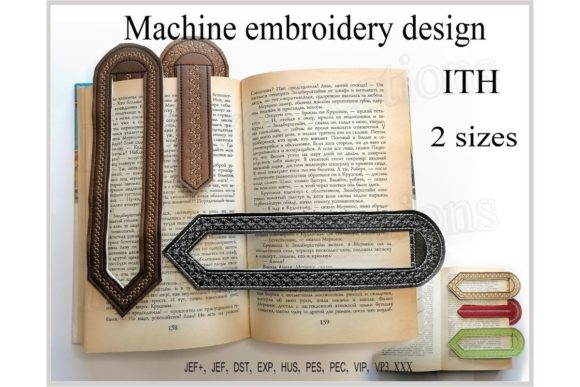
As someone who’s stitched hundreds of embroidery files for clients, Etsy shops, and boutique product lines, I opened Bookmarks in the Hoop expecting something sweet—but what stood out immediately was its quiet intentionality. It doesn’t shout. It doesn’t overload with glitter or cartoonish energy. Instead, it offers clean lines, balanced proportions, and a gentle rhythm between text and motif—exactly the kind of machine embroidery design that reads as thoughtful, not hurried. I tested it on a linen-cotton tea towel first, then moved to a lightweight cotton tote—and both times, the finished piece felt like something a child would proudly tuck into their favorite storybook, not just another school supply.
Where This Design Lives Best—And Where It Might Hesitate
Bookmarks in the Hoop thrives in projects where clarity, charm, and calm matter more than flash: embroidered pillow covers for nursery decor, minimalist aprons for small-batch bakeries, personalized baby onesies (especially in soft pastel thread), or even subtle sweatshirt embroidery for teachers’ lounge gifts. Its multiple sizes are genuinely useful—not just scaled-up versions, but thoughtfully adjusted so taller variants hold vertical flow, while wider ones breathe across tote bag panels without crowding seams.
It also works beautifully as an embroidered patch—clean satin stitch borders, moderate fill stitch density, and no micro-details that vanish at 3” width. That makes it ideal for craft fair vendors stitching pre-made patches to sell by the dozen. As a digital embroidery file, it’s strong enough to anchor a Back To School collection on Etsy, especially when paired with coordinating monogram or initial files.
Fabrics That Cooperate—And Ones That Need Extra Care
I ran Bookmarks in the Hoop on three fabric types: medium-weight quilting cotton (ideal), brushed poly-cotton blend (good with light tear-away stabilizer), and a thin rayon challis (tricky—required cutaway + basting spray). On stretchy knits like jersey, I’d avoid it unless fused with iron-on stabilizer and hooped tightly—it’s not built for high-give surfaces. Dark fabrics? Yes—but only if you choose thread colors with enough contrast; pale script elements can disappear without testing. Curved surfaces like caps? Not recommended unless resized down significantly and re-digitized for low-profile stitch height.
The design avoids dense clusters of tiny lettering or nested satin stitches, which means less risk of puckering on lightweight linens or delicate baby embroidery. Still, I always check corners and inner curves before stitching live—some versions include decorative flourishes that tighten up unexpectedly on textured fabrics like waffle-weave kitchen towels.
Real-World Fit: A Tote Bag That Feels Like a Gift
Last week, I used Bookmarks in the Hoop on a natural canvas tote for a local indie bookstore’s “Summer Reading Club.” We chose the medium-wide size, stitched in navy and cream DMC thread on off-white fabric. The result wasn’t just legible—it had weight, presence, and warmth. Customers paused mid-aisle to ask where we got the design. That’s the quiet power of this file: it doesn’t need bells to earn attention. It earns trust because it looks handmade, not mass-produced—even though it’s repeatable, scalable, and consistent across dozens of units.
What It Adds to Your Craft Business—Beyond the Stitch
For Etsy sellers and small shop owners, Bookmarks in the Hoop is more than a decoration—it’s a brand signal. When customers see this design on a personalized gift, they register care, literacy, and quiet confidence. That matters for holiday embroidery, teacher appreciation bundles, or even wedding favors (think: bookmarks tucked into custom storybooks for the couple’s first dance song lyrics). It lifts perceived value without raising production time. And because it’s easy to pair with simple fonts or minimal applique accents, it fits seamlessly into broader design assets—no jarring tonal shifts.
Designer Notes You’ll Actually Use
- Always test on scrap fabric first—especially if using textured, dark, or stretchy materials.
- Review stitch density visually, not just numerically. Some versions use tighter fill in floral motifs—check how that reads on your chosen thread weight.
- Confirm hoop size compatibility before cutting fabric. Even “small” versions may push the edge of a 4x4 hoop depending on layout.
- Inspect small details like leaf veins or serif endings—they’re charming, but vanish if undersized or poorly stabilized.
- Test black-and-white mockups to gauge contrast and readability before finalizing thread colors.
- Use appropriate stabilizer: light tear-away for stable wovens, cutaway for knits or lightweight linens.
- Verify licensing terms before selling finished products or bundling the digital embroidery file—commercial use isn’t automatic, even for Back To School designs.
Final Thought: A Design That Grows With You
Bookmarks in the Hoop isn’t flashy—but neither is confidence. It’s steady. It’s clear. It’s the kind of embroidery file that helps new stitchers succeed, gives seasoned designers a reliable anchor in seasonal collections, and reminds customers that handmade doesn’t have to mean complicated. Whether you’re building a craft business, personalizing back-to-school gear, or adding soul to everyday textiles, this design earns its place—not because it’s perfect, but because it’s purposeful.