Letter U: Clean, Versatile, and Craft-Fair Ready
A Designer’s First Glance: Minimalist Charm with Quiet Confidence
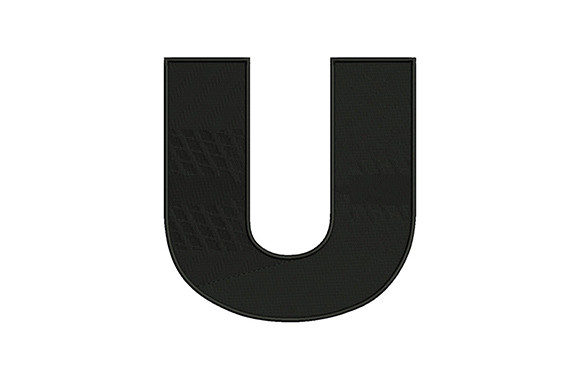
When I unzipped the Letter U embroidery file and opened it in my digitizing software, my first thought was: This isn’t shouting — it’s smiling. It lands firmly in the minimal, modern, and softly premium zone — not too cutesy for back-to-school buyers, not too stark for handmade shoppers who love warmth. There’s no script flourish or cartoon bounce; instead, clean curves, balanced proportions, and intentional negative space give Letter U a quiet confidence that reads as intentional, not generic. That matters — especially when your craft fair booth has 37 other alphabet designs competing for attention.
Where Letter U Shines on Real Products
In my booth prep last month, I stitched Letter U across six product types — tote bags, aprons, tea towels, embroidered patches, fabric pouches, and pillow covers — and here’s what stood out:
- Tote bag design: At 4.5" wide centered on a natural canvas tote, Letter U read instantly from 6 feet away. No crowding, no confusion — just crisp, elevated simplicity. Customers paused, pointed, and asked, “Is that just ‘U’? I love how clean it is.”
- Apron embroidery: Placed above the pocket (not on the bib), it added subtle personality without competing with functional details. Works beautifully on both denim and linen-blend aprons — a win for boutique makers targeting teachers and small-batch bakers.
- Tea towel embroidery: Here’s where Letter U surprised me. On tightly woven cotton towels, the stitch density held up cleanly — no puckering, no thread snagging. Paired with tonal thread (e.g., oatmeal thread on cream towel), it felt artisanal, not mass-produced.
- Embroidered patch: At 2.25", Letter U retained clarity and shape. Perfect for iron-on or sew-on applications on backpacks, denim jackets, or market bags — ideal for Etsy sellers bundling “monogram + patch” kits.
- Fabric pouch & pillow cover: As a focal point on a 6"x8" pouch or centered on a 16" pillow front, Letter U delivered strong visual balance. Its open form avoids heaviness — critical when stitching on lightweight quilting cotton or textured linen.
What Makes Letter U Sell — and What Requires Care
Letter U succeeds because it’s instantly legible, photograph-friendly, and production-smart. It doesn’t rely on tiny serifs or dense fill stitches to communicate — meaning fewer re-hooping moments, less thread breakage during batch runs, and faster turnaround for small shop product lines. For Etsy sellers, that translates directly into consistent listing photos: one well-lit shot of Letter U on a neutral tote reads as polished, cohesive, and brand-aligned — even without supporting graphics.
But let’s be real: not every surface is forgiving. Letter U performs best when you honor its structure:
- Avoid ultra-dense stitch areas — if your version includes heavy satin borders or tight fill zones, test on scrap first. Thick fabrics (like duck canvas or quilted cap backs) can mute fine detail.
- Don’t shrink below 1.75" — at smaller sizes, the inner curve loses definition, especially on textured tea towels or looped terry. Keep it ≥2" for patches or caps.
- Dark fabric demands contrast — this isn’t a design that fades gracefully into black or navy. Use bright white, pale gold, or true ivory thread to preserve readability.
- Curved surfaces need stabilization — on baseball caps or curved market bags, pair Letter U with medium-cutaway stabilizer and reduce top tension slightly. Skip the tear-away here — it won’t hold the shape.
Booth Impact, Brand Strength, and Buyer Psychology
At craft fairs, Letter U doesn’t scream — it invites. That’s rare. Most single-letter designs either feel like afterthoughts (“just throw a letter on it”) or try too hard (“look how fancy my font is!”). Letter U lands in the sweet spot: personal but not precious, simple but not sparse. When displayed alongside full-name monograms or quote-based embroidery, it acts as visual breathing room — a calm counterpoint that draws thoughtful buyers.
For handmade product lines, that calmness builds perceived value. A customer holding a Letter U-embroidered linen pouch doesn’t think “basic.” They think “curated,” “intentional,” “made with care.” That perception lifts price tolerance, supports repeat purchases, and strengthens booth cohesion — especially when paired with complementary design assets like minimalist numerals or clean botanical motifs.
Designer Notes You Can’t Skip Before Production
Before cutting your first production run, do these five things — not as checklist items, but as non-negotiable quality gates:
- Test the machine embroidery design on scrap fabric matching your final product (e.g., actual tea towel weave, not quilting cotton).
- Check thread colors side-by-side on light, medium, and dark fabric swatches — monitor color ≠ real-world color.
- Review spacing and stitch density visually, not just digitally. Zoom out. Does it look balanced at arm’s length?
- Confirm hoop size compatibility with your most-used hoops — avoid last-minute resizing that distorts proportions.
- Use the right stabilizer for your fabric texture and always create at least one real mockup before listing or packing for the fair.
And one final note: if you plan to sell finished products commercially — whether as a craft fair product, Etsy seller, or wholesale boutique maker — verify commercial licensing terms for this digital embroidery file. Don’t assume “multiple embroidery formats” includes unlimited commercial use. When in doubt, contact the designer or vendor directly.
Final Thought: Letter U Is a Quiet Workhorse
In a world of overdesigned back-to-school collections, Letter U is the understated anchor your lineup needs. It’s not flashy — but it’s reliable, versatile, and deeply resonant with customers who choose handmade for authenticity, not ornamentation. Whether you’re stitching 12 tote bags for Saturday’s market or building a cohesive Etsy collection around minimal alphabet pieces, Letter U delivers consistent performance, visual calm, and real selling power. Just remember: its strength lies in restraint. Let it breathe. Let it land. And watch how often someone picks it up, turns it over, and says, “I need this.”