Red Frame Number Six: A Smart Brand Patch Choice
First Impression: Friendly, Clean, and Commercially Ready
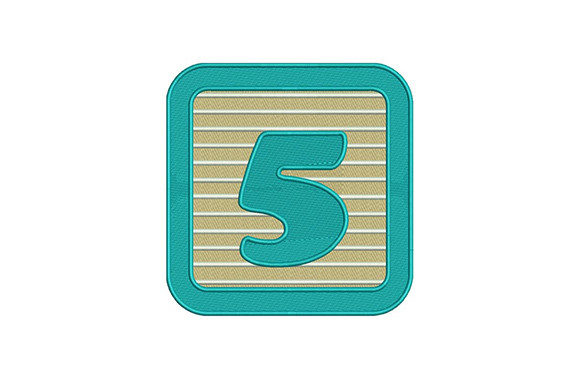
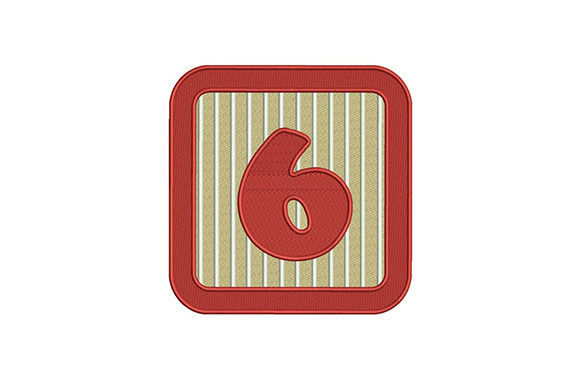
As an embroidery designer who’s digitized and stitched thousands of small business projects—from café aprons to florist tote bags—I opened Red Frame Number Six expecting a playful back-to-school motif. What I found instead was a surprisingly versatile, balanced machine embroidery design: clean lines, intentional negative space, and a subtle frame structure that implies order without rigidity. It reads as friendly and approachable—not childish—and carries enough visual weight to function as a brand anchor rather than just a seasonal accent. For a small business owner or apparel decorator, that duality is gold: it works in August for school supply bundles *and* in March for spring pop-up events.
Real-World Business Uses—Where Red Frame Number Six Shines
This isn’t just another decorative embroidery file—it’s a functional branding tool. Here’s how it performs across common commercial embroidery applications:
- Embroidered patches: The frame’s outer edge stabilizes stitching beautifully at 2.5"–3.5" sizes. It holds shape through laundering and iron-on or sew-on application—ideal for boutique merchandise tags or pet brand collar patches.
- Apron embroidery & staff uniforms: Positioned on the chest or left sleeve, Red Frame Number Six adds polish without overwhelming. Its open center leaves room for optional monogramming or small logo integration—great for bakeries, studios, or local shops building cohesive team wear.
- Cap embroidery: At 2" wide, it scales cleanly to front-panel placement. Unlike dense script logos, its frame-based geometry avoids distortion on curved surfaces—no puckering or thread breakage on structured caps.
- Tote bag design & product packaging accents: Stitched in matte cotton thread on natural canvas, it conveys handmade authenticity while maintaining legibility. Pair it with a simple tagline (“Est. 2022” or “Hand-Picked Daily”) inside the frame for instant brand storytelling.
- Etsy branding & craft business assets: As a consistent design element across listings—think printable mockups, digital pattern covers, or packaging seals—it strengthens visual recognition. Customers begin associating that red frame with your shop’s quality and personality.
Where to Use Red Frame Number Six With Intention
Even strong designs need thoughtful placement. Avoid using Red Frame Number Six at under 1.75" without testing—it risks losing definition in the inner number detail. On dark uniforms (navy, charcoal, black), verify thread color contrast: a rich burgundy or deep brick red often reads more professionally than true scarlet. Also, tread carefully on highly textured fabric like bouclé or heavy burlap—the frame’s crisp outline may blur unless paired with cutaway stabilizer and reduced stitch density.
Because the description notes it “stitches out nicely on a variety of fabrics,” I recommend running a test on your most common substrate first: cotton twill for caps, medium-weight denim for totes, or poly-cotton blend for staff shirts. That way, you’ll confirm how the frame interacts with your typical hoop size and tension settings before committing to bulk production.
How It Builds Brand Identity—Beyond Aesthetic
Small business merch isn’t just about visibility—it’s about trust. A well-executed Red Frame Number Six signals attention to detail: clean registration, balanced fill, and thoughtful spacing tell customers you value craftsmanship. That perception lifts perceived product value—whether it’s a $28 ceramic mug with a matching embroidered sleeve patch or a $14 reusable tote sold at a farmers’ market.
It also supports visual consistency across touchpoints. Use it identically on your Etsy banner, your Instagram story highlight icon, and your physical apron embroidery—and customers subconsciously register continuity. That repetition builds recognition faster than any one-off graphic. And because it’s not overly literal (no apples, no backpacks), it avoids dating your brand—even though it’s listed under Back To School, its structure feels timeless enough for year-round use.
Practical Designer Notes Before You Stitch
Before adding Red Frame Number Six to your next client’s custom apparel order or your own product line, run these quick checks:
- Test in black and white first. This reveals spacing issues, overlapping elements, and density imbalances that color can mask.
- Verify small-patch viability. Resize to your smallest intended use (e.g., 2" for cap fronts) and inspect the number “6” for legibility—especially the curve and tail.
- Review thread color contrast against your base fabric—not just on screen. A red frame on burgundy fabric may vanish; on kraft paper tote? It pops.
- Inspect spacing between frame and number. Tight gaps can close up during stitching on soft knits—add 0.3mm buffer if needed.
- Confirm hoop size compatibility. Does it fit comfortably within your standard 4x4 or 5x7 hoop? If it pushes boundaries, adjust placement strategy early.
- Use appropriate stabilizer. Tear-away for stable wovens; cutaway for stretchy or lightweight fabrics—especially important for uniform longevity.
- Create a printable mockup for client approval before stitching. Show it on actual garment photos—not just white backgrounds.
- Compare beside other design assets. Does it sit comfortably next to your wordmark, icon, or secondary patterns—or does it visually compete?
- Confirm commercial licensing. Since this is a digital embroidery file intended for small business merch, ensure the license permits resale, promotional use, and unlimited stitched units.
Bottom line: Red Frame Number Six is more than a back-to-school embroidery file—it’s a scalable, repeatable, brand-forward asset. When applied intentionally, it elevates handmade product presentation, reinforces professionalism, and quietly strengthens customer engagement—one precise stitch at a time.