School Gnome with Book
A Friendly, Thoughtful Design That Fits Real Life—Not Just the Hoop
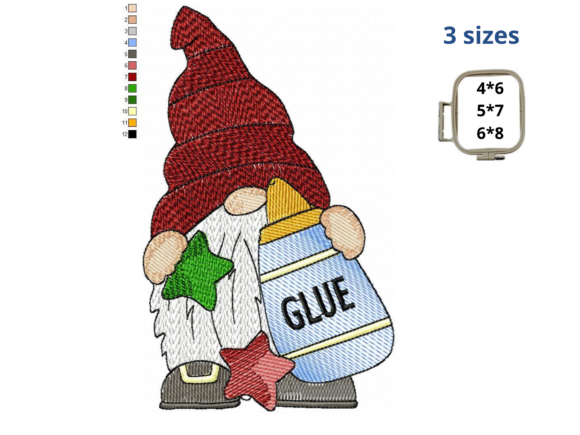
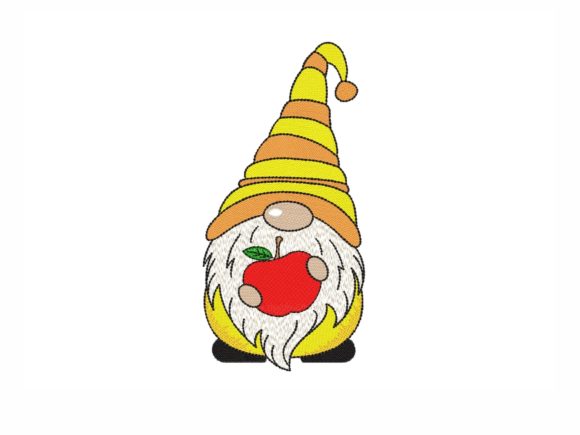
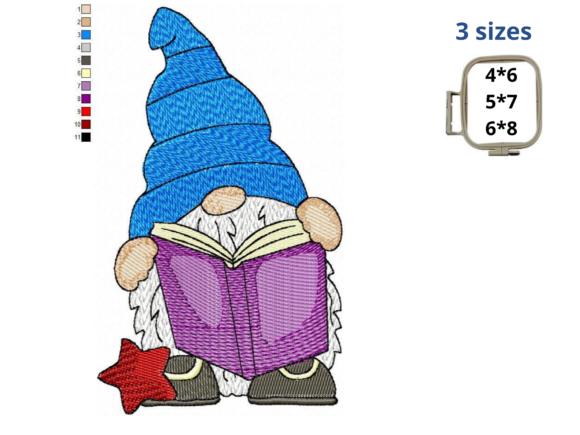
As someone who’s stitched hundreds of embroidery files for clients, Etsy shops, and boutique apparel lines, I opened School Gnome with Book expecting charm—and got something more: quiet intentionality. This isn’t just a cartoonish character slapped onto a hoop. It’s a compact, well-proportioned machine embroidery design that balances whimsy with wearability. The gnome sits upright, holding an open book with gentle curves—not stiff or overly detailed—and wears a soft cap tilted just so. There’s no forced “cute,” no exaggerated grin or busy accessories. Instead, it feels like a companion: calm, approachable, quietly smart. That tone matters—especially when you’re stitching it onto a child’s first-day-of-school sweatshirt or a teacher’s tote bag.
How It Landed in My Real-World Project: A Teacher Appreciation Tote
Last week, I used School Gnome with Book on a natural canvas tote for a local elementary school’s “Thank You” gift set. I chose medium-weight cotton canvas, medium tear-away stabilizer, and matte poly thread in navy, cream, and warm brown. The result? Clean satin stitch on the hat brim, smooth fill stitch in the book pages, and subtle running stitch for the gnome’s beard texture—all held together without puckering or distortion. Parents and teachers alike paused to smile at it—not because it shouted, but because it felt *known*. That’s the quiet strength of this design: it doesn’t need volume to make an impression. It reads clearly at 3.5 inches tall, holds up in a 4x4 hoop, and scales gracefully down to 2.75 inches for baby onesies or up to 5 inches for pillow covers.
Where It Shines—and Where It Asks for Your Attention
School Gnome with Book works beautifully across a range of handmade products—but not all surfaces are equal. On structured items like denim jackets, twill aprons, or cotton-linen tea towels? Excellent. The shape anchors well, and the balanced stitch density avoids stiffness. On lightweight jersey tees or ribbed baby bodysuits? Proceed with care: use cut-away stabilizer underneath *and* topping (like water-soluble film) to prevent skipped stitches in the curved hat seam or fine book outline. On dark fabric, test thread contrast first—the book’s inner detail relies on light/dark interplay, not heavy fill. And on caps? Stick to front panels only; the curved crown distorts the gnome’s posture unless you’re using a cap frame and adjusting tension manually.
- Tote bag design: Ideal center-front placement—readable from across a classroom hallway.
- Sweatshirt embroidery: Pairs naturally with left-chest or upper-back positioning; avoids bulk thanks to moderate stitch count.
- Baby embroidery: Sweet on bibs or burp cloths, but avoid dense satin areas near mouth contact unless using OEKO-TEX certified thread.
- Embroidered patch: Works cleanly as a sew-on or iron-on if digitized with clean underlay and tight satin edges.
- Holiday embroidery: Surprisingly versatile—swap the book for a tiny pumpkin or snowflake in your own edit (if license permits), or keep it as-is for “first day of kindergarten” or “graduation prep” gifting.
What It Adds to Your Craft Business—Beyond the Stitch
For Etsy sellers and small shop owners, School Gnome with Book is a quiet trust-builder. It signals care—not just in execution, but in curation. Customers scrolling past dozens of back-to-school designs notice its restraint. They imagine giving it as a personalized gift and feel confident it won’t look dated or chaotic six months later. That translates directly to fewer returns, more repeat buyers, and stronger brand consistency—especially if you pair it with a simple serif font for names or a coordinating monogram.
It also supports thoughtful presentation. When used in printable mockups for your digital embroidery file listings, it reads cleanly in grayscale—no lost details in shadows or highlights. That means your product previews convert better. And because the design avoids tiny lettering or micro-details (no “A+” on the book cover, no intricate spectacles), it stays legible after repeated washing—critical for children’s apparel or kitchen towels.
Designer Notes You’ll Want to Keep Handy
- Always test on scrap fabric first—especially if stitching on textured weaves or stretch knits.
- Check thread color contrast before final stitching; the book’s spine and hat band rely on tonal separation, not just hue.
- Review stitch density in your embroidery software—if it feels heavy in the base, reduce underlay slightly to improve drape on soft fabrics.
- Confirm hoop size compatibility; while it fits standard 4x4 hoops, verify if your version includes alternate sizes for larger garments or smaller accessories.
- Inspect small details at 200% zoom: the curve of the gnome’s smile, the spacing between book lines, and edge sharpness on the cap.
- Test black-and-white mockups to ensure visual balance without color crutches.
- Use proper stabilizer—medium cut-away for knits, tear-away for stable wovens, and fusible + topping for delicate or napped surfaces.
- Verify licensing before selling finished products or bundling the embroidery file with other design assets.
Ultimately, School Gnome with Book earns its place in my working library not because it’s flashy, but because it’s reliable. It’s the kind of machine embroidery design that disappears into the product—until someone smiles, points, and says, “Oh, I *love* that little guy.” That’s the mark of good design: it serves the wearer, the maker, and the moment—without needing applause. Whether you’re prepping for back-to-school season, launching a new craft business line, or simply choosing a meaningful embroidered patch for your child’s backpack, this one carries weight without heaviness. And in embroidery—where every stitch is a decision—that’s rare.